

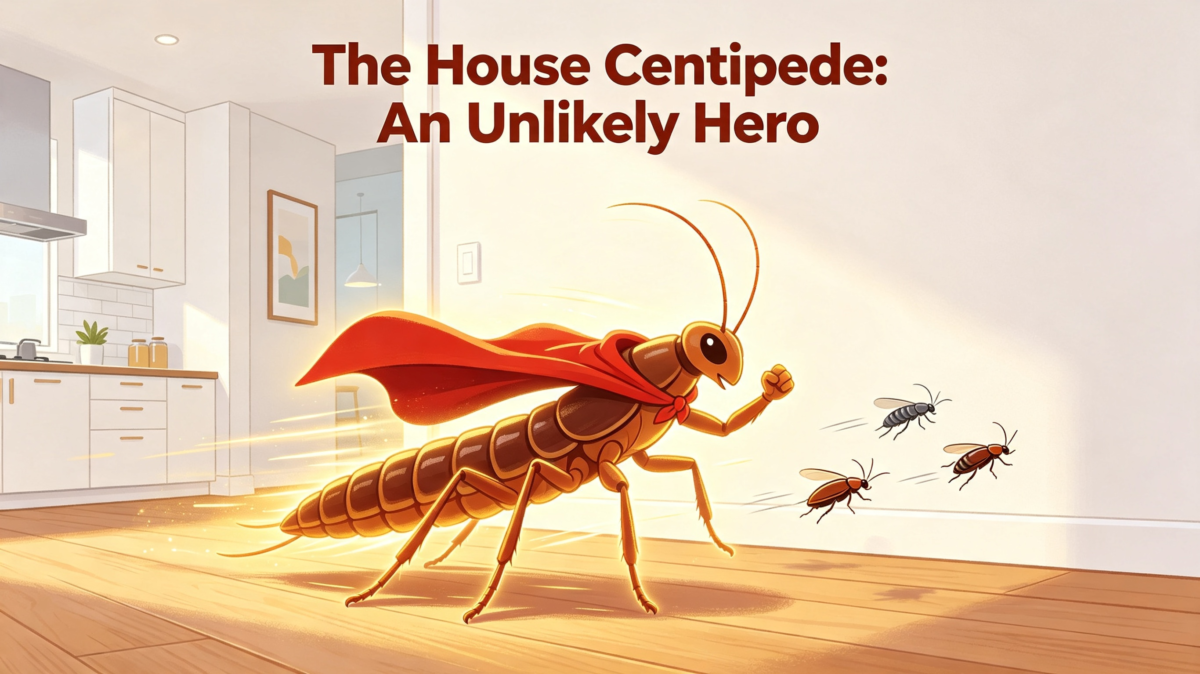
The House Centipede: An Unlikely Hero
There are few sights in a domestic setting as universally startling as the sudden, erratic scurrying of a house centipede. When you flip on the light in a dark basement or step into a dimly lit bathroom, the sudden appearance of this long, multi-legged creature can send a shiver down the spine. Its alien appearance and lightning-fast movements trigger a primal instinct to crush it. However, before you reach for a shoe or a rolled-up magazine, it is crucial to understand what this creature actually is. Far from being a malicious invader or a dangerous pest, the house centipede is actually an unsung hero of the household, silently working to keep your home free of the insects you truly hate.
The Anatomy of a Domestic Speedster
The house centipede, scientifically known as Scutigera coleoptrata, is a highly specialized predator that has adapted remarkably well to human dwellings. Originally native to the Mediterranean region, it has spread across the globe, thriving in the climate-controlled environments of our homes.
Physically, it is quite distinct from its outdoor, soil-dwelling relatives. It has a yellowish-grey body with three dark stripes running down its back, but its most striking features are its legs. It possesses exactly 15 pairs of incredibly long, fragile, and banded legs. These legs make it look much larger and more intimidating than it actually is, but they serve a vital purpose. They allow the house centipede to move with startling, jerky speed, darting across walls, ceilings, and floors with ease. Despite its terrifying appearance, it is important to note that these legs are extremely fragile; if caught, the centipede will willingly shed a leg (autotomy) to escape, and it can regenerate the lost limb in its next molt.
The Diet: A Menu of Household Pests
To understand why the house centipede is a hero, one must look at its diet. Unlike termites that eat your wood, pantry moths that ruin your food, or dust mites that trigger allergies, house centipedes do not consume human resources. They are strictly carnivorous, and they are exceptionally good at their job.
Inside a home, a house centipede will actively hunt and consume the very insects that humans consider to be true pests. They are apex predators of the indoor micro-ecosystem. Their menu inside the house typically includes:
- Cockroaches: A primary food source, helping to keep roach populations in check without the need for toxic baits.
- Silverfish and Firebrats: These pests damage books, wallpaper, and clothing; centipedes love to hunt them.
- Spiders: Even other predatory arachnids, including venomous species like black widows, are not safe from a house centipede.
- Ants and Termites: They will readily hunt down these common household invaders when they wander indoors.
- Bedbugs: While they prefer other prey, house centipedes will eat bedbugs if they encounter them.
- Flies and Moths: They are agile enough to catch flying insects that land on the floor or walls.
From an ecological standpoint, the house centipede is a highly beneficial, natural, and chemical-free pest control agent. They do not build messy webs, they do not multiply out of control indoors, and they do not carry diseases. In many ways, they are the ultimate "good cop" of the insect world.
Debunking the Myths: Are They Actually Dangerous?
The primary reason people view house centipedes as foes is the fear of being bitten. It is true that, like all centipedes, the house centipede possesses venomous forcipules. However, the reality of a house centipede bite is highly exaggerated.
First, their forcipules are relatively small and weak compared to their giant tropical cousins. In most cases, they are simply not strong enough to pierce human skin. If a house centipede does manage to bite you—usually only if it is being handled, squeezed, or trapped against the skin—the sensation is often compared to a mild bee sting or a mosquito bite. It may cause slight, localized redness and a minor stinging sensation that fades within a few hours. They are not aggressive toward humans, do not seek us out to bite us, and their venom is not medically significant. Furthermore, they pose absolutely no threat to pets like cats and dogs.
Why Are They in Your Home? The Ecological Indicator
If you are wondering why these creatures have moved into your house, you must look at your home through their eyes. Centipedes do not enter homes to bother humans; they enter because they are looking for two specific things: moisture and food.
As established in previous articles, centipedes are highly susceptible to drying out. If your home has damp areas—such as leaky pipes, poorly ventilated bathrooms, humid basements, or crawl spaces—it creates an ideal microclimate for them. Furthermore, they are strictly carnivorous. If your house has an abundance of other insects, it essentially represents a giant, climate-controlled buffet. Therefore, finding a centipede in your home is not a sign of poor hygiene; rather, it is an ecological indicator that your home has excess moisture and a healthy population of other bugs.
Coexistence: To Kill or Not to Kill?
Even though house centipedes are beneficial, it is completely understandable if you do not want to share your living space with them. If you wish to evict them or prevent them from entering, the key is to make your home inhospitable to them without necessarily using harsh chemicals or killing them.
- Reduce Moisture: This is the most effective step. Use dehumidifiers in damp basements, ensure bathrooms are well-ventilated, and fix any leaking pipes. A dry house is a centipede-free house.
- Eliminate Their Food Source: By controlling other insect populations, centipedes will naturally leave to find food elsewhere. Keep the house clean, store food in sealed containers, and manage other pests.
- Seal Entry Points: Inspect the exterior of your home. Seal cracks in the foundation, install door sweeps, and ensure window screens are intact to prevent them from wandering inside.
- Catch and Release: If you find one inside and want it gone immediately, simply place a glass over it, slide a piece of paper underneath, and release it outside. They will not survive long in the dry outdoor environment anyway, but this is a humane way to remove them from your sight.
Conclusion: Embracing the Shadow Exterminator
When a house centipede scuttles across your floor, it is easy to react with fear based on its alien appearance and rapid movements. However, taking a moment to understand its biology reveals a different truth. The house centipede is not a malicious invader, nor is it a dangerous foe. It is simply a predator doing what it has done for millions of years: hunting in the shadows. While they may not be the most aesthetically pleasing roommates, they are ultimately friends to the household, silently and efficiently keeping the truly problematic pests at bay. The next time you see one, consider simply watching it work, or gently guiding it outside, rather than reaching for the shoe. After all, every hero doesn't wear a cape; some have fifteen pairs of long, fragile legs.