

The Basics of Centipedes
Centipedes, belonging to the class Chilopoda within the phylum Arthropoda, are ancient and highly efficient predators found across nearly every terrestrial ecosystem worldwide. Despite the name "centipede" deriving from Latin roots meaning "100 feet," no species actually possesses exactly 100 legs. Their leg count varies dramatically by species, ranging from as few as 15 pairs in smaller varieties like *Scutigera coleoptrata* to over 177 pairs in giant tropical species such as *Scolopendra gigantea*. This adaptability in leg number correlates with their segmented body structure, where each segment houses a single pair of legs, enabling precise movement and balance.
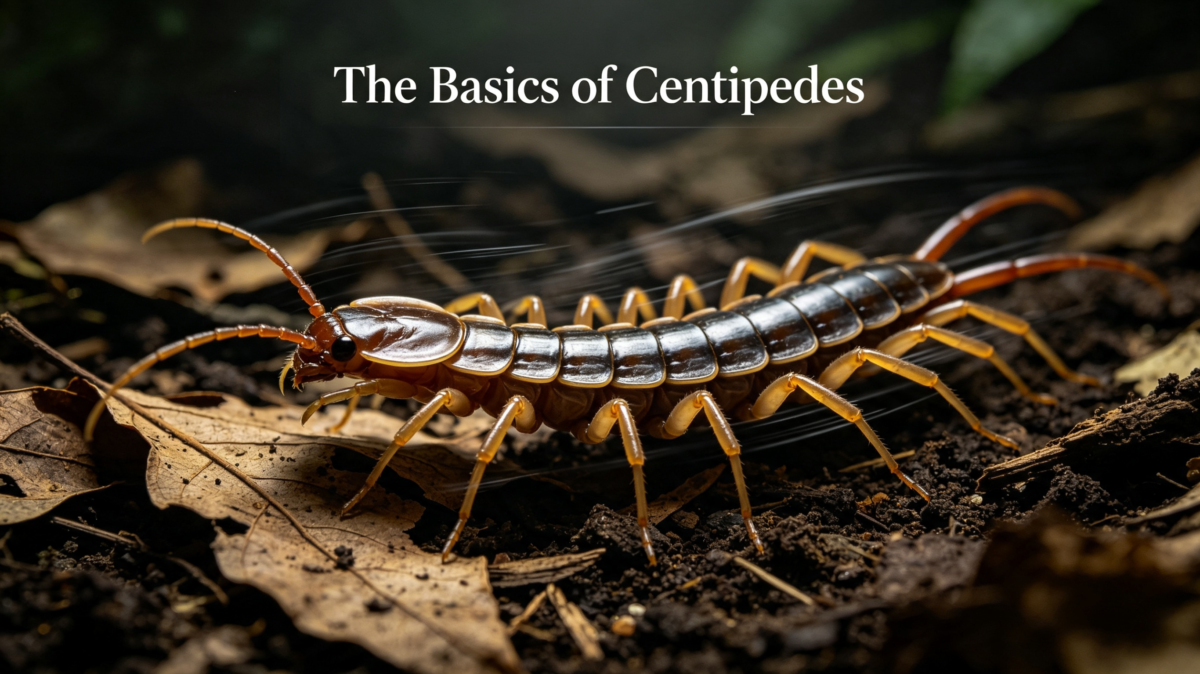
Their elongated, flattened bodies are covered in a tough exoskeleton that provides protection while allowing flexibility. A defining feature is the pair of modified front legs called *forcipules*, which function as venom-injecting claws. These specialized appendages allow centipedes to immobilize prey swiftly, making them top-tier hunters in soil and leaf-litter environments. Unlike insects, centipedes lack compound eyes and rely heavily on long, sensitive antennae to detect vibrations and chemical signals in their surroundings, compensating for poor vision. Their nocturnal behavior further enhances their ability to ambush prey in dark, moist habitats.
Centipedes exhibit remarkable diversity in size and habitat preference. While some species, like the house centipede (*Scutigera coleoptrata*), thrive indoors in humid areas such as basements, others inhabit tropical rainforests, deserts, and even subarctic regions. They undergo gradual metamorphosis, progressing from eggs through multiple molting stages into adulthood. During molting, they shed their exoskeleton to grow, a vulnerable period where they often hide until their new exoskeleton hardens. As keystone predators, centipedes play a critical role in controlling insect populations, including pests like cockroaches and termites, contributing significantly to ecosystem balance.
Despite their fearsome appearance, centipedes are not aggressive toward humans and rarely bite unless provoked. Their venom, while potent enough to subdue small prey, typically causes only mild, localized reactions in humans—similar to a bee sting. Understanding their ecological importance helps dispel common misconceptions, highlighting their role as natural pest controllers rather than threats. From evolutionary adaptations to ecological impact, centipedes remain one of the most fascinating and misunderstood arthropod groups, showcasing nature’s ingenuity in survival strategies across diverse environments.