

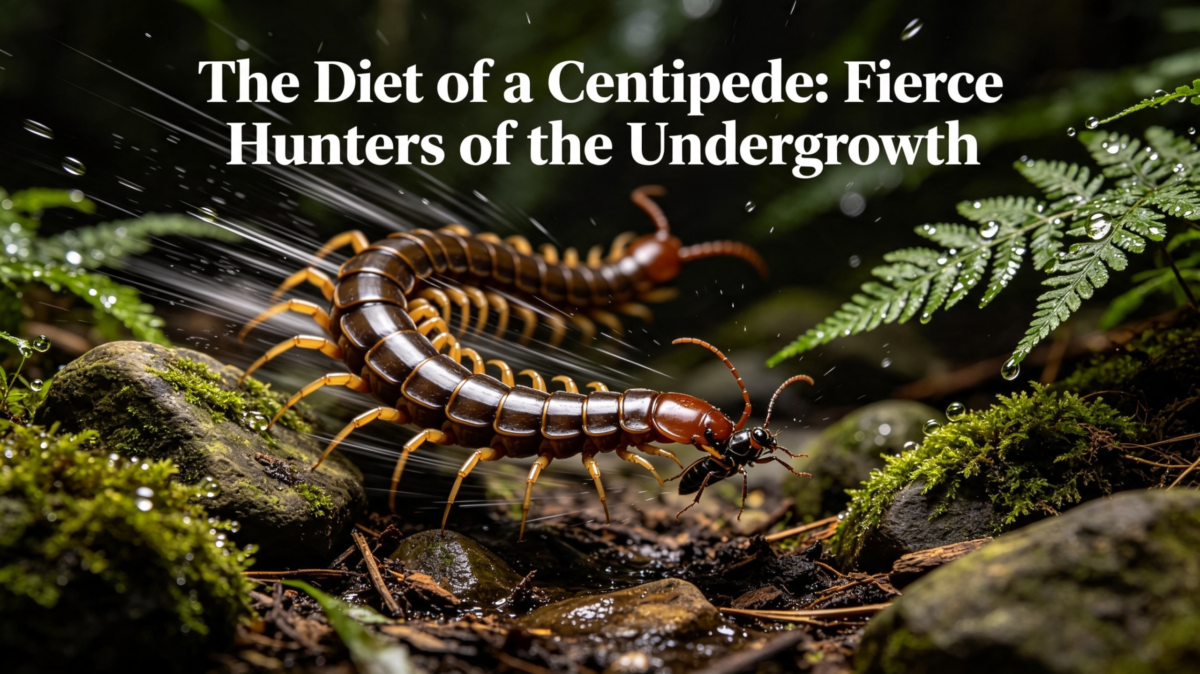
The Diet of a Centipede: Fierce Hunters of the Undergrowth
When we think of the creatures that inhabit the dark, damp spaces of the forest floor, we often imagine scavengers slowly breaking down decaying plant matter. While many soil-dwelling arthropods, such as millipedes and woodlice, fit this description, centipedes are a stark exception. They are the wolves of the invertebrate world. Strictly carnivorous and highly aggressive, centipedes are active hunters that play a vital role as apex predators in the micro-ecosystems of the undergrowth. Their diet, hunting strategies, and feeding mechanics are a testament to their evolutionary success as some of nature's most formidable miniature assassins.
The Hunting Strategy: Speed, Stealth, and Senses
Unlike web-building spiders that wait passively for a meal to arrive, or scavengers that rely on the scent of decay, centipedes are proactive hunters. They rely on a combination of explosive speed, keen senses, and stealth to secure their meals. The specific hunting style often depends on the species and their physical adaptations.
Fast-moving species, such as the House Centipede (Scutigera coleoptrata) and soil centipedes (Lithobiomorpha), are active foragers. They patrol their territories relentlessly, using their long, sensitive antennae and vibration-detecting body hairs to track the movements of prey. Once a target is identified, they use their numerous legs to execute a rapid, coordinated strike, outrunning and overtaking their victim before it can escape.
On the other hand, some species, particularly the larger tropical giants (Scolopendromorpha), often employ an ambush strategy. They will bury themselves slightly under leaf litter or soil, remaining perfectly still. When an unsuspecting insect or small animal wanders too close, the centipede erupts from its hiding spot, using its powerful front legs to grapple the prey and its forcipules to deliver a lethal strike.
The Arsenal: Forcipules and Paralyzing Venom
The success of a centipede's hunt relies heavily on its specialized anatomical weaponry. The defining feature of their diet acquisition is the forcipules—the modified first pair of legs that function as venomous fangs. When a centipede catches its prey, it rears up and brings these forcipules down in a pincer-like motion, piercing the exoskeleton, skin, or soft tissues of the victim.
Connected to venom glands at the base of the forcipules, the centipede injects a complex cocktail of toxins. This venom is highly specialized and typically contains a mix of neurotoxins, cytotoxins, and enzymes. The primary goal of the venom is rapid paralysis. By immobilizing the prey almost instantly, the centipede prevents the victim from struggling, which could damage the predator's delicate legs or allow the prey to escape. In some cases, the venom is also lethal, killing the prey outright before the feeding process even begins.
The Menu: From Tiny Insects to Small Vertebrates
The diet of a centipede is as diverse as the habitats they inhabit, but it is always strictly meat-based. What they eat largely depends on the size of the centipede.
The Standard Invertebrate Diet
For the vast majority of centipede species, the menu consists of other invertebrates. They are opportunistic feeders and will consume almost any animal they can subdue. Common prey includes:
- Insects: Crickets, cockroaches, beetles, moths, and fly larvae make up the bulk of their diet.
- Arachnids: Spiders and even smaller scorpions are frequently hunted and consumed.
- Annelids and Mollusks: Earthworms, slugs, and snails are also targeted, particularly by smaller, soil-dwelling species.
- Other Myriapods: Centipedes are cannibalistic by nature and will not hesitate to eat smaller centipedes or millipedes if the opportunity arises.
The Giants: Hunting Vertebrates
While most centipedes are limited to invertebrate prey, the largest species in the order Scolopendromorpha are capable of taking down surprisingly large vertebrate prey. The Amazonian Giant Centipede (Scolopendra gigantea), which can grow up to 12 inches (30 cm) in length, is a fearsome predator. Documented cases and scientific observations have shown these giants feeding on:
- Amphibians and Reptiles: Small frogs, toads, and lizards are regularly subdued by large tropical centipedes.
- Mammals: There are verified reports of giant centipedes捕食 (hunting and eating) small mice and shrews.
- Bats: In a remarkable display of predatory behavior, large centipedes in tropical cave systems have been observed clinging to the cave ceiling, waiting to snatch roosting bats out of the air and dragging them to the ground to be consumed.
Feeding Mechanics: The Liquefaction Process
Once the prey is paralyzed or killed, the centipede does not chew its food in the way mammals do. Like spiders, centipedes utilize a process called extraoral digestion (external digestion). Because their mouthparts are relatively small and not designed for chewing solid tissue, they must convert their prey into a liquid form.
After securing the paralyzed victim with its walking legs, the centipede uses its true mouthparts (the maxillae and mandibles) to tear a small hole in the prey's exoskeleton or skin. It then regurgitates powerful digestive enzymes directly into the wound. These enzymes rapidly break down the internal tissues, muscles, and organs of the prey, turning them into a nutrient-rich biological soup. Once the tissues are sufficiently liquefied, the centipede uses its mouthparts to suck up the pre-digested meal. After feeding, the only thing left behind is the hollowed-out exoskeleton or skin of the victim.
Ecological Significance: Nature's Pest Control
The predatory nature of centipedes makes them incredibly important to the health of terrestrial ecosystems. By consuming vast quantities of insects and other invertebrates, they act as a natural population control mechanism. In forests, gardens, and agricultural fields, centipedes help keep herbivorous insect populations in check, preventing outbreaks that could damage plant life and crops.
Furthermore, their presence in human dwellings, particularly the House Centipede, is highly beneficial. They act as natural, chemical-free pest control, hunting down unwanted household invaders such as cockroaches, termites, silverfish, and spiders. While their appearance may be unsettling to some homeowners, a house centipede is a sign of a clean, functioning micro-ecosystem doing its job to eliminate actual pests.
Conclusion: The Essential Predators of the Shadows
The diet of a centipede is a reflection of its evolutionary purpose. They are not mere scavengers picking at the edges of the food web; they are active, fierce hunters situated near the top of the invertebrate food chain. Through their specialized venom, rapid hunting tactics, and unique digestive processes, they efficiently convert the abundant biomass of the undergrowth into energy. In doing so, they maintain the delicate ecological balance of the soil and leaf litter, proving that even the smallest, most shadow-dwelling creatures play a massive role in the natural world.