

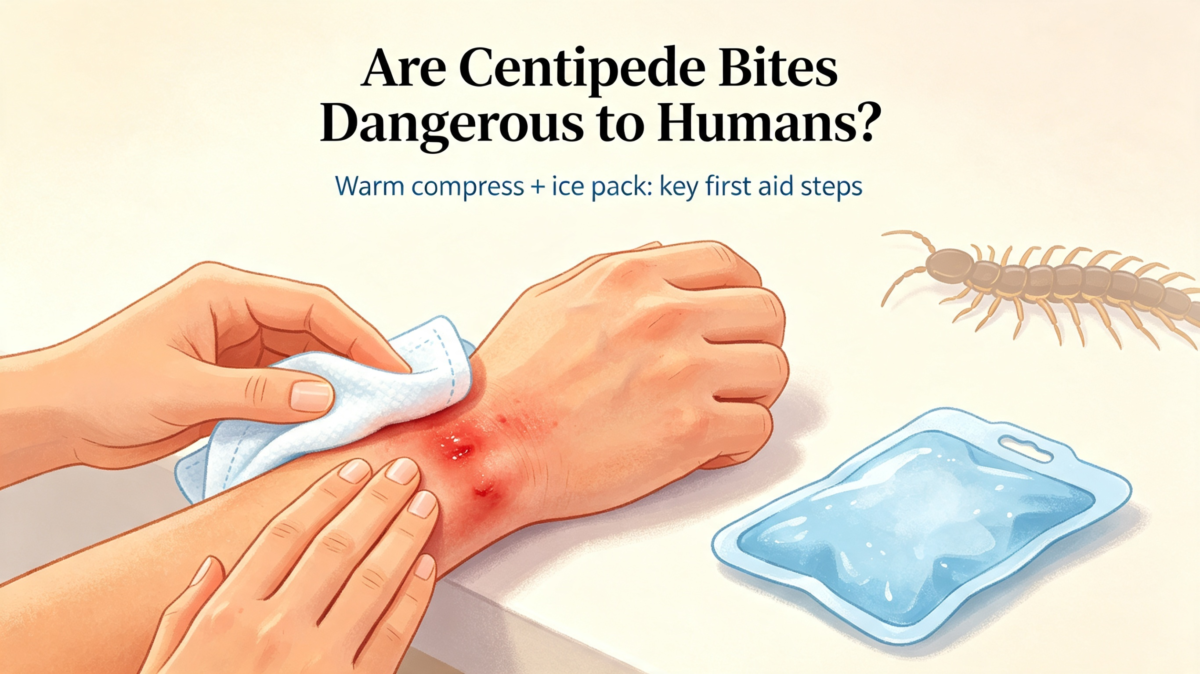
Are Centipede Bites Dangerous to Humans?
When a person encounters a centipede, the immediate reaction is often a mix of disgust and primal fear. With its dozens of undulating legs, rapid movements, and the knowledge that it possesses venom, it is easy to understand why these creatures are often viewed as highly dangerous. This fear naturally leads to one of the most common questions regarding myriapods: Are centipede bites dangerous, or even deadly, to humans? The short answer is no; centipede bites are rarely dangerous to humans. However, the longer answer requires a deeper understanding of their venom, their behavior, and the actual physiological effects of a bite.
The Evolutionary Purpose of Centipede Venom
To understand the danger of a centipede bite, we must first understand why they have venom in the first place. Centipedes are strictly carnivorous predators. Their venom is not designed to deter large mammals or humans; it evolved specifically to subdue fast-moving, resilient invertebrate prey such as large insects, spiders, and worms. The venom is a complex cocktail of neurotoxins, enzymes, and cytotoxins engineered to rapidly paralyze the nervous system of a creature with a completely different biological makeup than a human.
Because the venom is highly specialized for small invertebrates, it is not systemically lethal to humans. When a centipede bites a person, the venom does not circulate through the human bloodstream to cause organ failure or death. Instead, the effects are almost entirely localized to the site of the bite. The intense pain humans feel is essentially an accidental byproduct of a venom designed to overwhelm the nervous system of a much smaller, differently wired creature.
Why Do Centipedes Bite?
It is a common misconception that centipedes are aggressive creatures that actively seek out humans to attack. In reality, centipedes are incredibly shy, reclusive, and photophobic (afraid of light). They have poor eyesight and rely on vibrations and chemical cues to navigate the world. To a centipede, a human is not prey; we are massive, terrifying predators.
Almost all centipede bites occur purely in self-defense. A bite typically happens when a human accidentally steps on a centipede, rolls over one in bed, or attempts to pick it up or handle it with bare hands. When trapped, squeezed, or threatened, the centipede's only means of defense is to use its modified front legs, called forcipules, to deliver a venomous strike. If you leave them alone, they have absolutely no interest in interacting with you.
The Physical Experience: Symptoms of a Bite
If you are unfortunate enough to be bitten by a centipede, the experience can be genuinely frightening and painful, though not life-threatening. The forcipules act like hypodermic needles, piercing the skin and injecting the venom. The most immediate and prominent symptom is intense, sharp, and throbbing pain at the puncture site.
Many people compare the pain of a centipede bite to a severe bee sting, a wasp sting, or even a minor scorpion sting. The pain usually peaks within the first few minutes to an hour after the bite. Along with the pain, the bite site will typically exhibit the following localized symptoms:
- Redness and Inflammation: The skin around the two small puncture wounds will become red and inflamed.
- Swelling: Localized swelling is very common and can make the area feel warm and tight.
- Itching or Numbness: As the venom interacts with the local nerve endings, some people experience a tingling sensation, mild numbness, or itching around the wound.
- Swollen Lymph Nodes: In some cases, the lymph nodes closest to the bite (such as those in the groin for a leg bite, or the armpit for an arm bite) may become tender and slightly swollen as the immune system responds to the foreign proteins.
These symptoms generally peak within 24 hours and gradually subside over the next 24 to 48 hours. Complete recovery without medical intervention is the norm for the vast majority of bites.
Size Matters: House Centipedes vs. Giant Centipedes
The severity of a centipede bite is directly proportional to the size of the centipede. The common House Centipede (Scutigera coleoptrata), despite its terrifying appearance and long legs, has very small and weak forcipules. In most cases, a house centipede is physically incapable of piercing human skin. If it does manage to bite, the sensation is barely noticeable, often compared to a mild mosquito bite or a tiny pinprick.
On the other end of the spectrum are the giant tropical centipedes, such as the Asian Giant (Scolopendra subspinipes) or the Amazonian Giant (Scolopendra gigantea). These massive creatures have thick, powerful forcipules that can easily pierce human skin, thick clothing, and even thin shoes. A bite from a giant centipede delivers a much larger volume of venom, resulting in excruciating pain, severe swelling, and sometimes localized tissue necrosis (tissue death) or fever. While still rarely fatal, a bite from a giant species is a significant medical event that requires careful attention.
The Real Dangers: Infection and Allergies
If the venom itself is not deadly, what are the actual risks? There are two primary dangers associated with a centipede bite, neither of which are caused by the systemic toxicity of the venom.
The first risk is a secondary bacterial infection. Centipedes hunt in dirty environments like soil and leaf litter, meaning their forcipules can carry bacteria. If the puncture wound is not cleaned properly, bacteria can enter the skin and cause an infection. Furthermore, the intense itching caused by the healing bite can lead to scratching, which breaks the skin and introduces more bacteria.
The second, and most serious, risk is an allergic reaction. Just as some people are deathly allergic to bee stings, a small percentage of the population may be highly allergic to the proteins in centipede venom. In these rare cases, a bite can trigger anaphylaxis, a severe, life-threatening allergic reaction that causes difficulty breathing, swelling of the face and throat, a drop in blood pressure, and dizziness. This is a medical emergency, but it is an issue of individual immune response, not the inherent deadliness of the centipede's venom.
Proper First Aid for a Centipede Bite
If you or someone else is bitten by a centipede, taking the correct first aid steps can significantly reduce pain and prevent complications. Follow this protocol:
- Wash the Wound: Immediately wash the bite area thoroughly with plain soap and warm water. This removes any surface bacteria and reduces the risk of secondary infection.
- Apply Heat Therapy: This is a crucial and often overlooked step. Centipede venom is composed of heat-labile proteins, meaning the toxins break down and lose their effectiveness when exposed to high temperatures. Immerse the bitten area in hot water (as hot as you can comfortably tolerate without burning the skin, around 45°C or 113°F) for 15 to 20 minutes. Alternatively, use a warm compress. This can dramatically reduce the pain.
- Apply Cold Therapy: After the heat treatment, apply an ice pack wrapped in a cloth to the area. The cold will help constrict blood vessels, reducing swelling and numbing the remaining pain.
- Manage the Pain: Over-the-counter pain relievers such as ibuprofen or acetaminophen can help manage the discomfort. An antihistamine cream or oral antihistamine can also help reduce itching and swelling.
- Elevate the Limb: If the bite is on an arm or a leg, keep it elevated to help minimize swelling.
When to Seek Medical Attention
For the vast majority of people, a centipede bite can be treated at home. However, you should seek immediate professional medical attention if you experience any of the following:
- Signs of anaphylaxis, such as difficulty breathing, wheezing, swelling of the lips/tongue/throat, or feeling faint.
- The bite was delivered by a very large, tropical giant centipede, and the pain is unmanageable.
- Signs of a secondary bacterial infection develop after a few days, such as increasing redness, red streaks spreading from the bite, pus, or a fever.
- The pain and swelling do not begin to improve after 48 hours.
Conclusion: Respect, Not Terror
Are centipede bites dangerous to humans? In the grand scheme of medical emergencies, no. They are not deadly, they do not cause systemic poisoning, and they do not turn humans into zombies as depicted in horror movies. A bite is essentially a painful, localized inflammatory event that mimics a bad bee sting.
However, this does not mean centipedes should be handled casually. The pain from a larger species is severe enough that you will want to avoid it at all costs. By understanding the reality of centipede bites, we can replace our irrational terror with a healthy respect. They are venomous predators that deserve to be admired from a safe distance, left to hunt pests in the shadows without the threat of human interference.